
Next-Gen Solar Battery by Cancrie Nanocarbon
- Darsh Singh
- Dec 10, 2025
- 1 min read

Updated: Jan 3

Why Traditional Solar Batteries Struggle
Solar batteries operate in harsh conditions—irregular sunlight, deep discharge cycles,
temperature fluctuations, and frequent load-shedding. These factors cause sulfation, poor recharge efficiency, and early capacity loss. As a result, energy output becomes unpredictable, and battery life shortens significantly.
How Cancrie Nanocarbon Creates the Difference
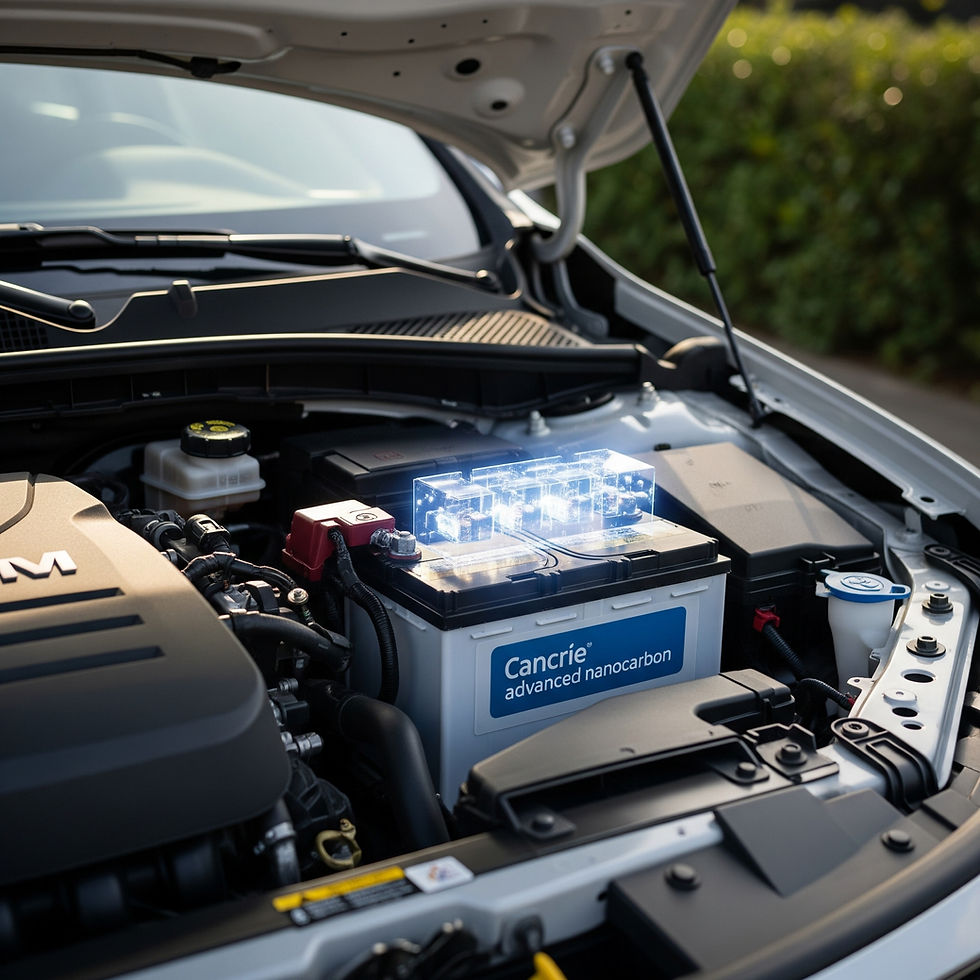
Cancrie uses Lead-Acid and Lithium-Ion batteries using advanced nanocarbon materials
engineered for solar environments. The technology improves charge acceptance, reduces sulfation, and supports stable performance even under PSOC (Partial State of Charge)—a state most solar batteries operate in daily.
Faster recharge in low sunlight
Nanocarbon enhances the battery’s ability to absorb charge quickly even during short sunlight windows, ensuring better energy recovery on cloudy or low-irradiance days.
Higher daily usable energy
Reduced resistance and better efficiency ensure more stored power is available for actual use each day.
More cycles and reduced failure rates
By limiting sulfation and stress during PSOC operation, batteries deliver more cycles with fewer performance issues.
15% longer battery life
Optimized chemical stability extends overall battery life, lowering replacement frequency and long-term costs.

Better Reliability for Off-Grid and Rural Solar
From solar home systems and microgrids to telecom hybrid networks and agricultural pump controllers, Cancrie ensures more predictable energy availability. Batteries upgraded with Cancrie Nanocarbon deliver consistent performance and reduces battery replacements, lowering lifetime costs.


Comments